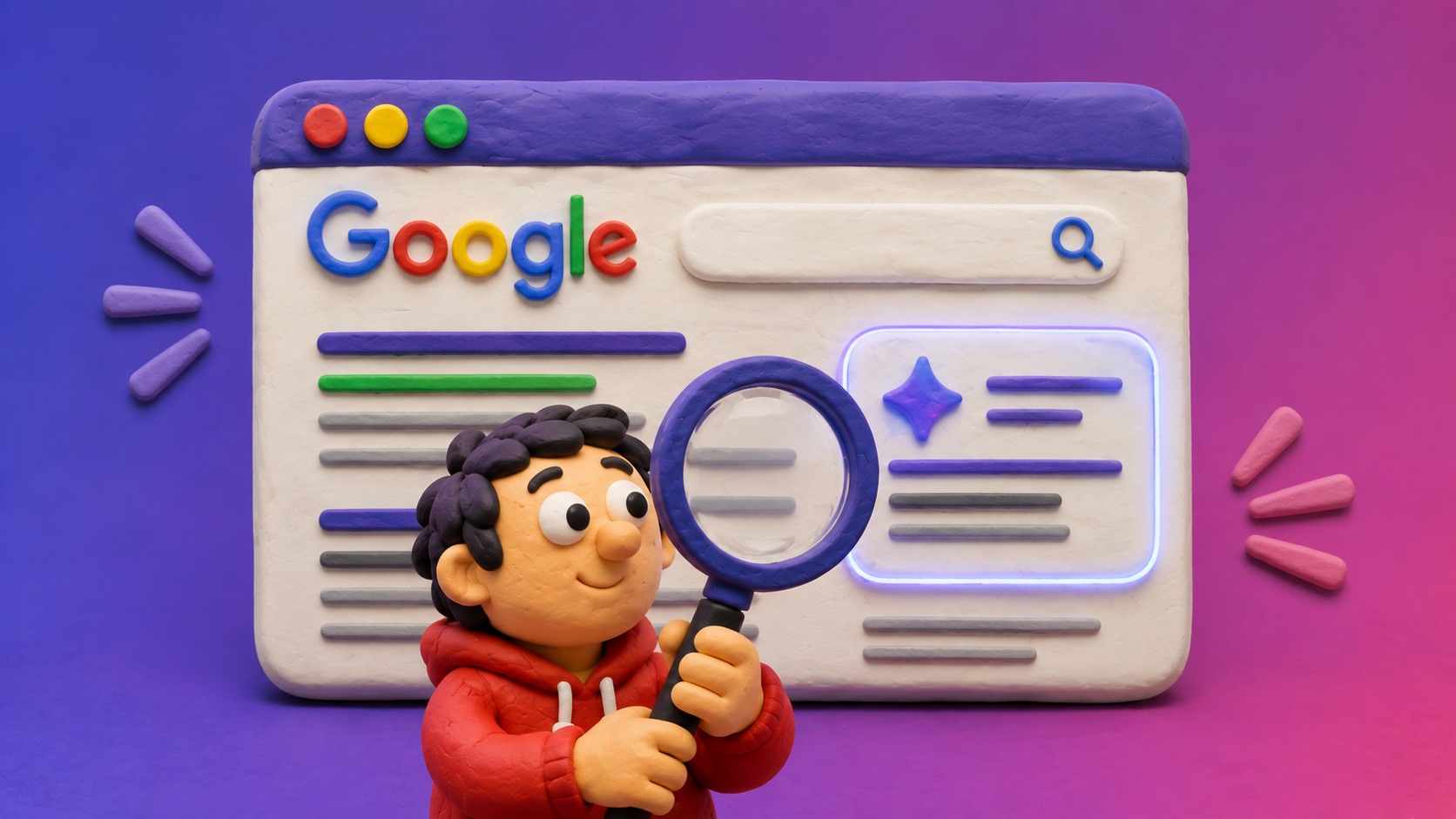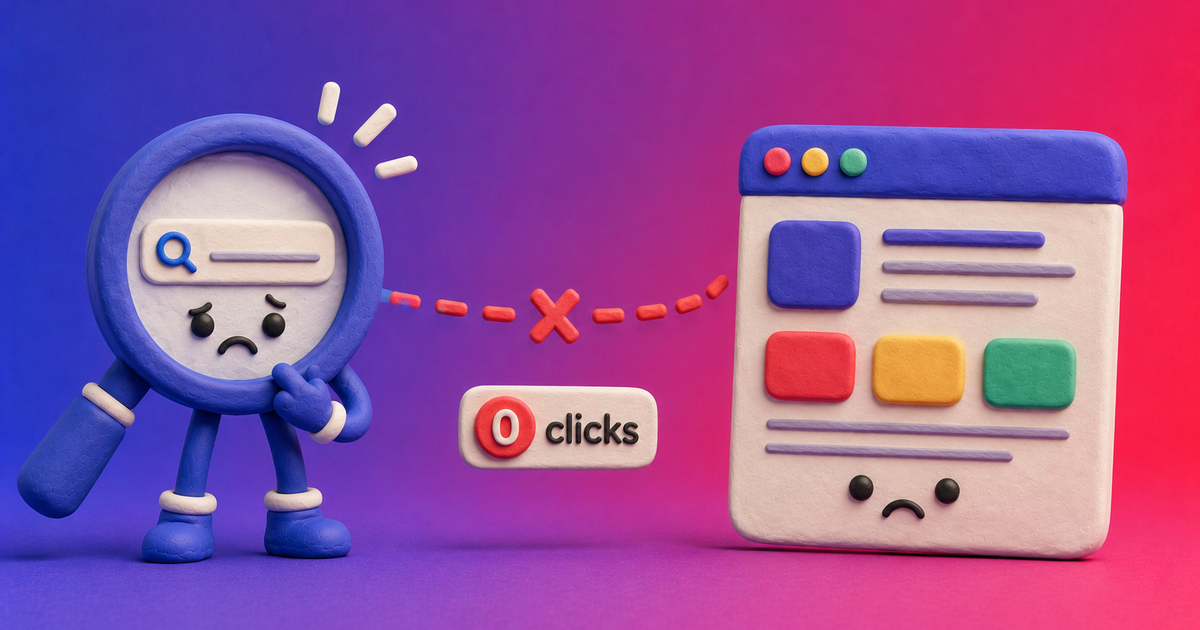
You check your rankings and you’re right where you should be — maybe even #1. But your website traffic keeps drifting down anyway. If that sounds familiar, you’re not imagining it, and it’s probably not something you did wrong. It’s a shift happening across the entire web called zero-click search, and it’s accelerating fast in 2026.
What’s Actually Happening
A “zero-click search” is exactly what it sounds like: someone searches, gets their answer right there on the results page, and never clicks through to any website. This isn’t new — it’s been creeping up since Google introduced featured snippets years ago. What’s new is how much AI has sped it up.
Google’s AI Overviews — the AI-written summaries that now appear above the normal search results — show up on somewhere around half of all Google searches, depending on which study you look at. And when an AI Overview appears, the odds someone clicks through to any website drop even further than with a normal search.
Why This Is Speeding Up Right Now
AI search itself is also pulling traffic away from traditional search entirely. Visits from AI platforms like ChatGPT, Gemini, Claude, Perplexity, and Grok grew nearly 43% year over year in early 2026. People are increasingly asking an AI assistant a question instead of typing it into Google at all — and when they do, the assistant often answers directly, using information pulled from websites the person never visits.
Google Analytics has even started tracking this shift as its own traffic source. We covered GA4’s new AI Assistant channel in an earlier post — it’s worth checking your own numbers there, because AI-driven visits often get miscounted as something else entirely if you don’t know what to look for.
Not Every Site Is Affected the Same Way
The damage isn’t evenly spread. Sites built around informational content — how-to guides, definitions, general explainers — are getting hit hardest, in some cases losing 40 to 70 percent of their organic traffic in a single year. That makes sense: those are exactly the kinds of questions an AI can answer in a paragraph without sending anyone anywhere.
Sites built around things AI can’t fully answer — local businesses, specific products, bookings, anything that requires trust in a real business rather than just information — are holding up much better. People still click through when they need to actually do something, not just learn something.
This Doesn’t Mean SEO Is Dead
It means the goal of SEO is shifting. Ranking #1 for an informational question used to guarantee a visitor. Now it might just guarantee that an AI system reads your page, summarizes it, and answers the question for you — without a click. The strategies that matter now go by newer names: Answer Engine Optimization (AEO) and Generative Engine Optimization (GEO), both aimed at making sure AI systems can find, trust, and correctly represent your content — even when the click doesn’t happen.
Practically, that means leaning harder into structured data and schema markup so AI systems can parse your content accurately, writing in a way that supports semantic search rather than just keyword matching, and building the kind of E-E-A-T (experience, expertise, authority, trust) signals that make both Google and AI systems more confident citing you by name.
What You Can Actually Do
Start by figuring out which of your pages are informational versus transactional. The informational ones need to be optimized for AI citation, not just clicks — concise, well-structured answers near the top, clear headings, and real expertise behind them. The transactional ones — anything tied to booking, buying, or contacting you — still deserve the traditional SEO push, because those are the searches still reliably sending people to actual websites.
If you’re not sure where your site stands, that’s exactly the kind of audit an SEO strategy built for 2026 should start with, rather than treating this like a problem to panic over.
The Takeaway
Traffic dropping while rankings hold steady isn’t a sign you’re doing something wrong. It’s a sign the finish line moved. The web is splitting into two kinds of searches: the ones AI can fully answer on its own, and the ones that still require a real website, a real business, and a real click. Your job now is knowing which of your pages fall into which category — and building each one for the world it actually lives in.