In December 2025, OpenAI CEO Sam Altman sent his team what’s since been called a “code red” memo. The message: competitors are catching up fast, and ChatGPT can no longer coast on being first.
He had good reason to worry. According to Similarweb, ChatGPT held 87.2% of the AI chatbot market in January 2025. One year later, that number had fallen to 68%, the steepest drop of any dominant tech platform in recent memory.
The gap didn’t close because ChatGPT got worse. It closed because a handful of other companies got very good, very fast, each one carving out its own piece of the market by being genuinely better at something specific. Here’s how the top players actually stack up.
Who’s Actually Winning?
By raw market share, it’s not close. ChatGPT still commands a massive lead, with Gemini a distant but rapidly rising second.
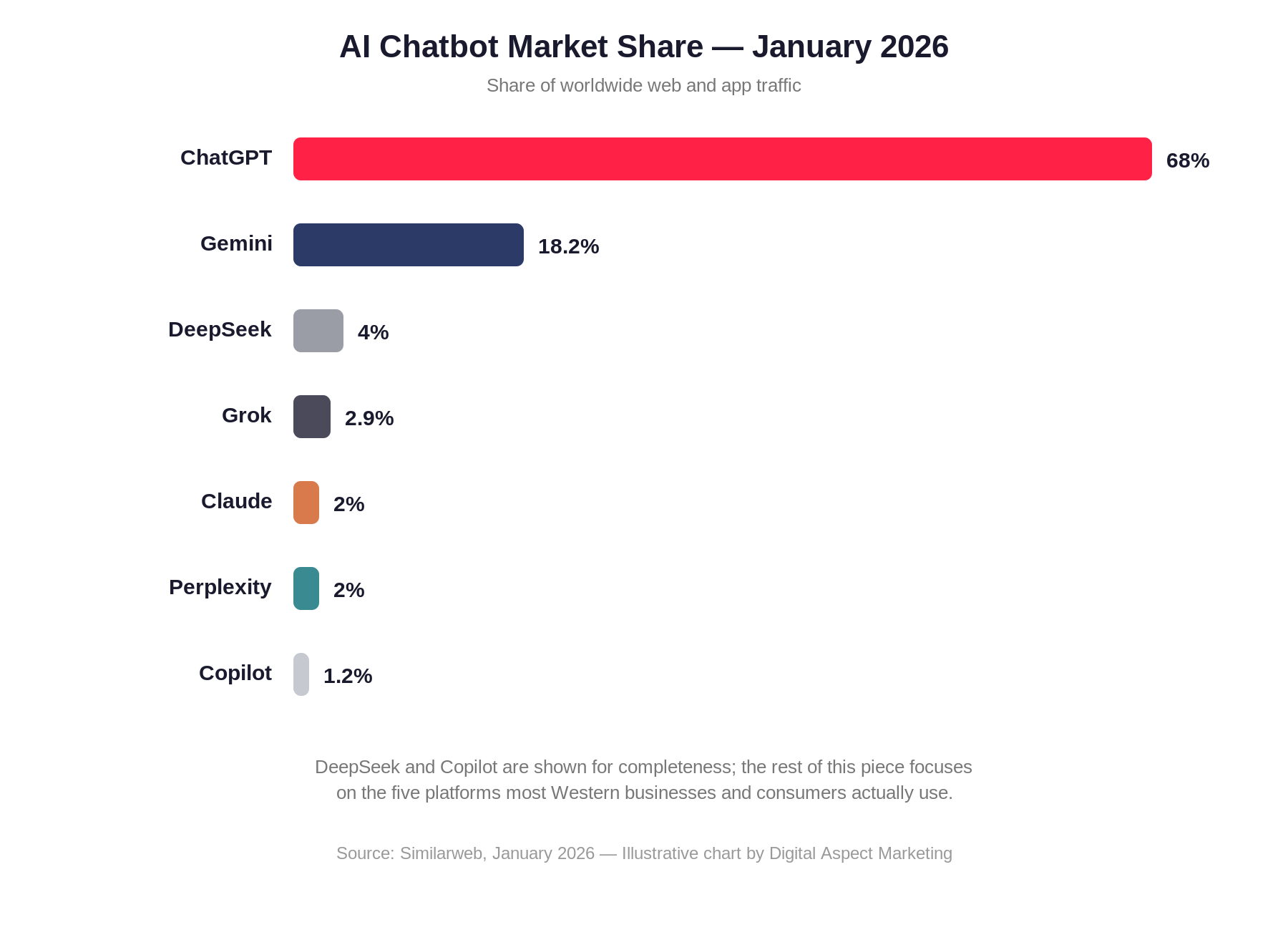
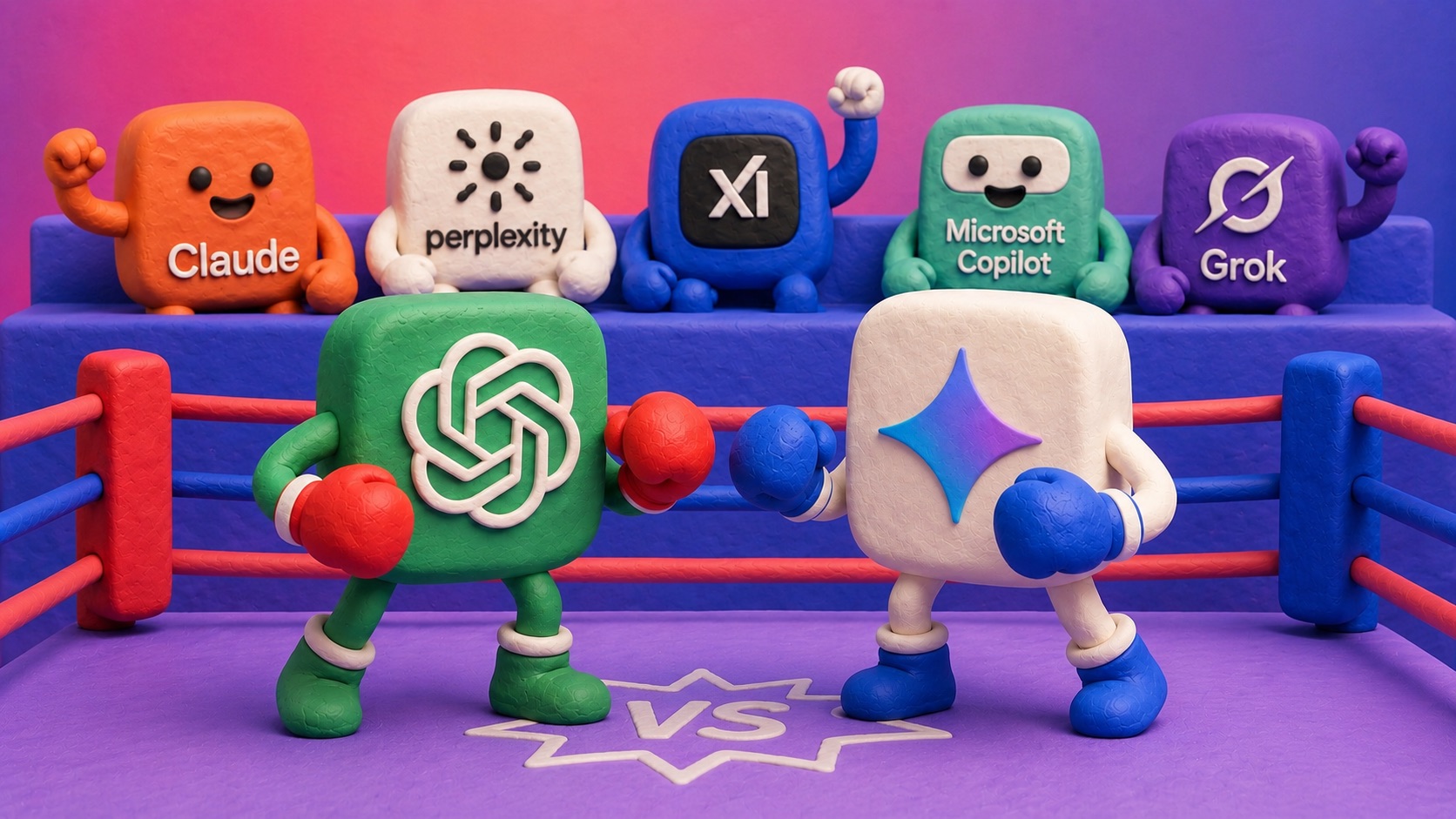
DeepSeek, a Chinese competitor with aggressive pricing, and Microsoft’s Copilot round out the wider field but sit outside the five platforms most Western businesses and consumers actually use day to day, which is where we’ll focus for the rest of this piece.
The Real Story Is Growth, Not Just Share
A snapshot of market share only tells you where things stand today. Growth rate tells you where things are headed, and on that measure, the picture flips.
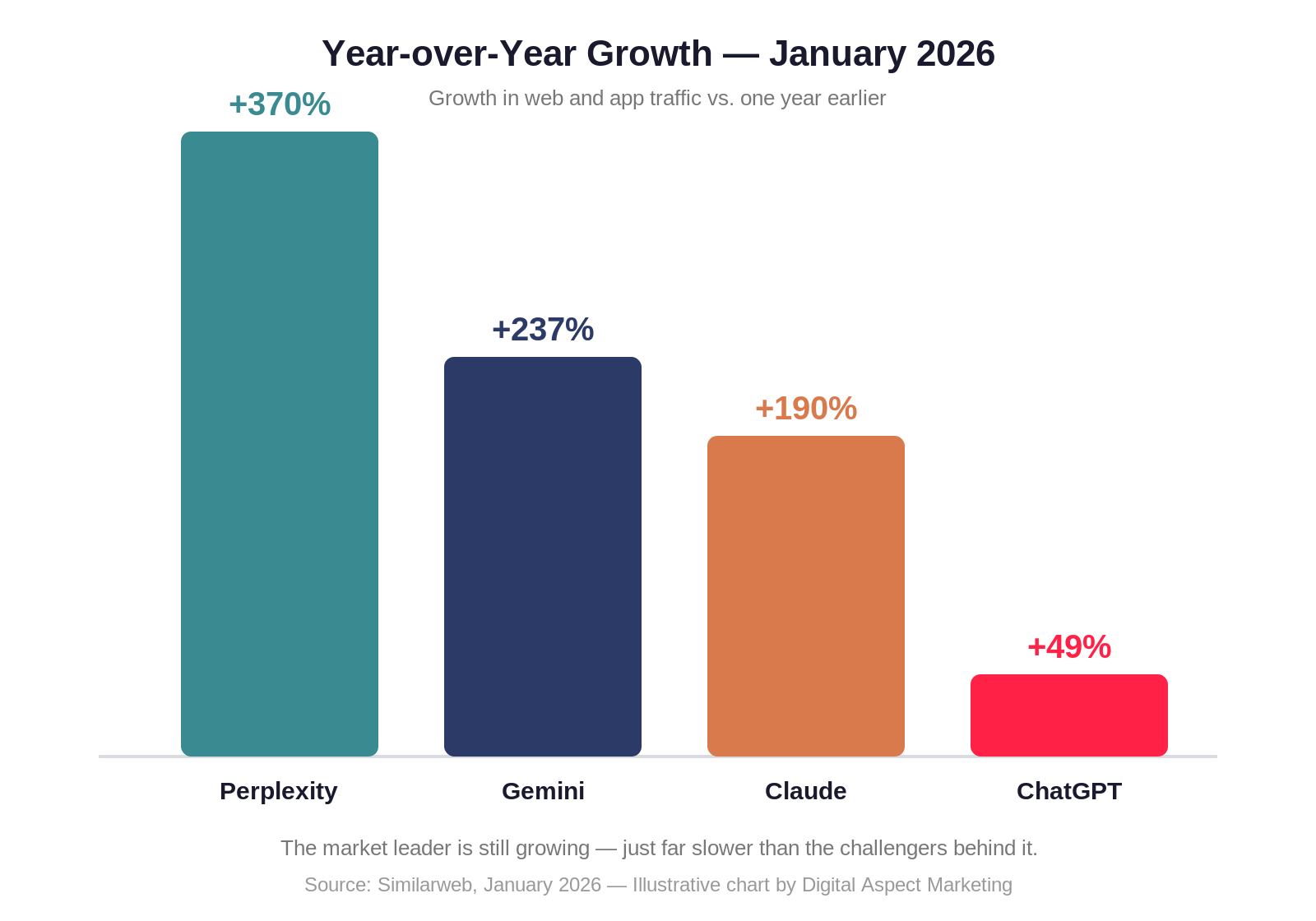
Perplexity grew 370% year over year. Gemini grew 237%. Claude grew 190%, alongside a projected $2.2 billion in 2025 revenue. ChatGPT, still the giant, grew a comparatively modest 49%.
None of these companies are losing ground in absolute terms. But only one of them is still growing at anything close to its old pace, and it isn’t the one in first place.
The Top 5, and What Each One Actually Does Best
Market share and growth explain who’s winning the race for attention. They don’t explain why people are actually switching. That comes down to what each platform is genuinely good at.

ChatGPT remains the most versatile all-rounder, and the default choice for ideation, brainstorming, and image generation. Its enterprise API is also the most mature of the group, which is part of why it still holds such a commanding lead in raw usage.
Gemini wins on integration. It’s built directly into Android, Google Search, Gmail, and Workspace, so most people encounter it without ever deciding to. It also processes far more information at once than its rivals, and produces images with unusually reliable, legible text.
Claude is the one professionals reach for when accuracy actually matters. It leads independent benchmarks for coding and writing quality, and has a noticeably lower hallucination rate, which is likely why its growth is coming disproportionately from enterprise customers rather than casual users.
Perplexity was built for research from the start. Every answer comes with visible citations, and it has the lowest rate of citation errors of the group, which matters enormously if you’re actually going to trust and use the sources it points you to.
Grok has one advantage nobody else can fully match: a live feed into what’s happening on X right now. For anything tied to breaking news or real-time sentiment, it answers with information that’s minutes old, not months.
So, Which One Should You Actually Use?
Honestly, there isn’t one right answer, which is part of why the market hasn’t consolidated around a single winner despite ChatGPT’s early lead.
A reasonable rule of thumb: reach for ChatGPT for general tasks and image generation, Claude for writing and code you actually need to trust, Perplexity when you want sourced research instead of a confident guess, Gemini when you’re already living inside Google’s ecosystem, and Grok when you want to know what’s happening on social media right this second.
Why This Matters Beyond the Headlines
This isn’t just a story about tech companies competing for attention. Every one of these platforms is now a place where people research businesses, compare options, and get recommendations, which is exactly why answer engine optimization has become a real discipline rather than a buzzword.
A market this competitive, and this fast-moving, means the platform your customers are asking about your business today may not be the one they’re asking six months from now. Worth watching all five, not just the one currently in first place.