If you’ve opened ChatGPT recently and noticed a small sponsored suggestion tucked under an answer, you weren’t imagining it. In February 2026, OpenAI did something it had resisted for years: it started showing ads inside ChatGPT.
What Changed
OpenAI rolled out advertising to ChatGPT’s free tier and its new $8/month “Go” plan. If you pay for Plus, Pro, Business, or Enterprise, none of this affects you — those tiers stay ad-free. The reasoning is straightforward: the free version of ChatGPT has always cost OpenAI money to run, and with the company reportedly committed to roughly $1.4 trillion in infrastructure spending over the next several years, someone has to help cover the bill.
What the Ads Actually Look Like
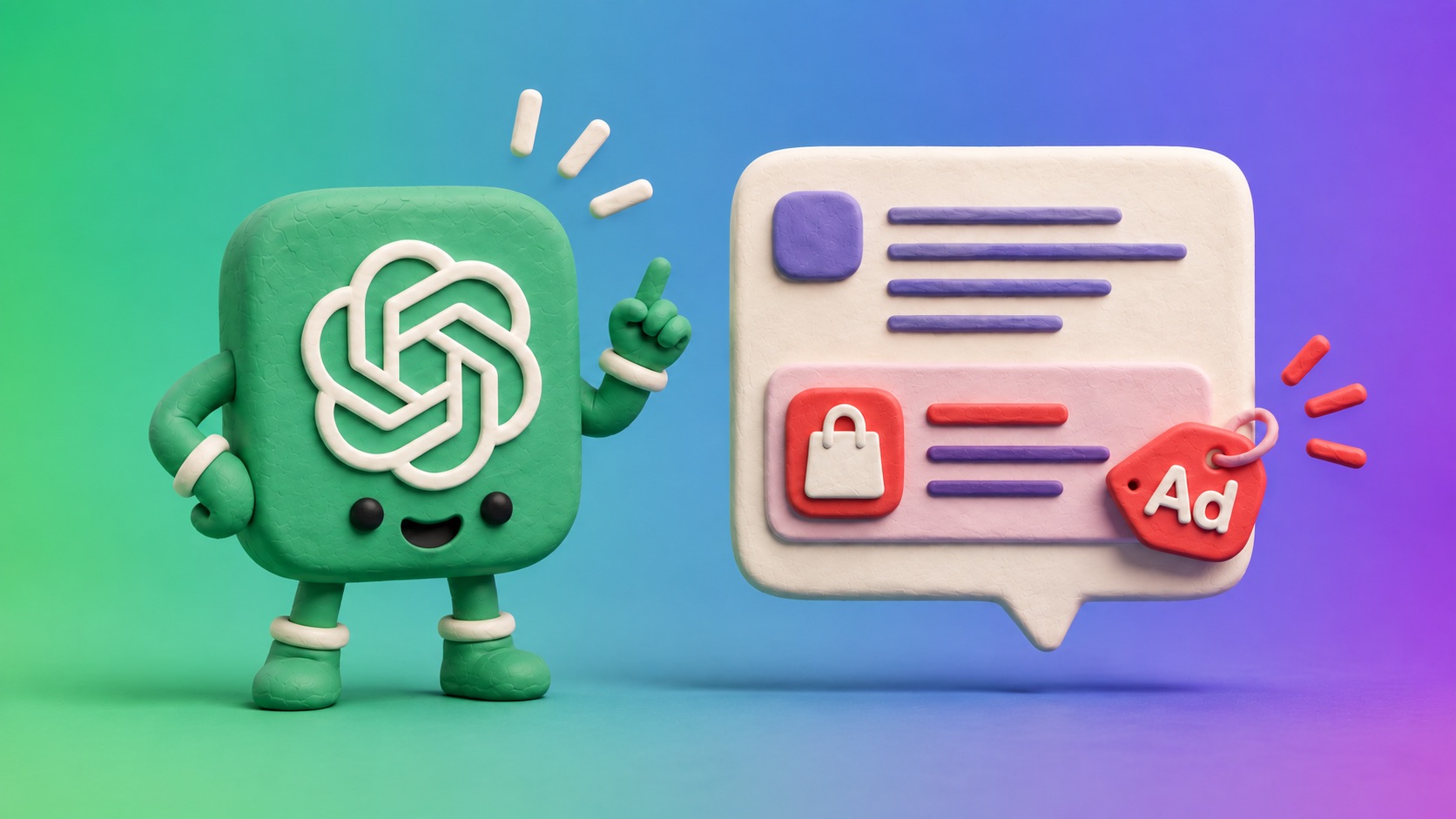
These aren’t banner ads or pop-ups. A sponsored suggestion shows up at the bottom of a ChatGPT response when there’s a product or service relevant to what you were just talking about, and it’s clearly labeled as an ad, separate from the actual answer. Ask ChatGPT for a weekend trip itinerary, for example, and you might see a sponsored hotel suggestion appended below the response it generated for you.
This is a form of native advertising and sponsored content — ads designed to sit inside the format of the platform rather than interrupt it, the same way a sponsored post blends into a social feed.
How Advertisers Are Buying These
OpenAI launched the ad platform with cost-per-thousand-impressions (CPM) pricing, then added cost-per-click (CPC) bidding in May 2026 so advertisers only pay when someone actually acts on the ad. A self-serve platform opened that same month, removing the budget minimums that had limited early access to big-name brands. Personalized ads — ones that use more of what OpenAI knows about you to pick a relevant sponsor — are optional, and OpenAI has said it won’t share your actual conversations with advertisers.
What’s Off-Limits
OpenAI has said ads won’t appear near sensitive topics — health, mental health, and politics are explicitly excluded. That’s a deliberate line: an AI assistant giving out medical or emotional advice with a sponsored suggestion attached would erode trust fast, and OpenAI knows it.
Why This Matters Beyond ChatGPT
This is bigger than one product update. It’s a signal that AI chat interfaces are becoming a genuine advertising channel, alongside search and social. Major agencies including Omnicom, WPP, and Dentsu have already lined up brands to test the format. If AI assistants are where people increasingly go for recommendations, the businesses that show up inside those conversations — through ads, or simply because the assistant already knows about them — will have an advantage the ones that don’t show up won’t.
What It Means for You
If you’re on the free tier, expect the occasional labeled suggestion under your answers, not a takeover of the experience. If a fully ad-free ChatGPT matters to you, that’s the argument for a paid plan. And if you run a business, this is one more place customers might now discover you — or discover a competitor instead — which puts pressure on making sure your own site and content are visible to AI systems in the first place, not just to Google.