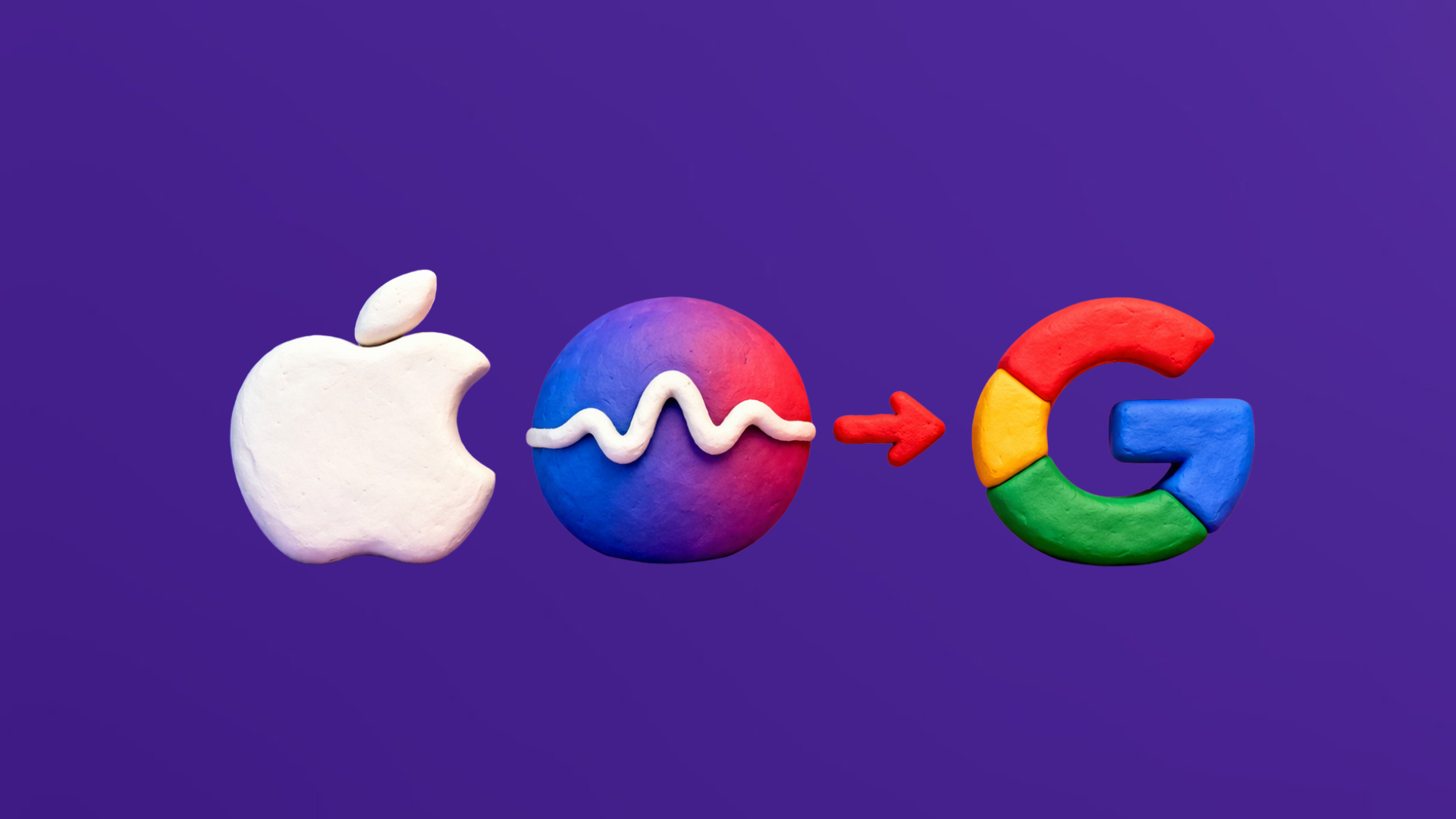
Apple and Google have confirmed a multi-year partnership that places Google’s Gemini models at the core of Apple Intelligence and a rebuilt Siri. This isn’t a routine vendor agreement—it’s a strategic pivot that signals how seriously Apple views the AI race.
For decades, Apple’s strength came from owning the full stack: hardware, software, silicon, and services. Allowing Google to power Siri’s reasoning layer marks a rare shift away from that philosophy. But the choice is clear—AI capability now outweighs strict independence.
Apple chose relevance over purity.
How the Apple–Google AI Stack Works
Despite dramatic headlines, Apple hasn’t handed control of Siri to Google. The system is intentionally layered, with Apple maintaining ownership of the experience.
Gemini acts as the advanced reasoning engine inside Apple Foundation Models, handling complex, multi-step tasks. Apple’s on-device models still manage simple requests for speed, cost efficiency, and privacy. When cloud-based reasoning is required, Gemini runs on Apple-controlled servers using Apple Silicon through Private Cloud Compute—keeping user data away from Google.
Siri also gains real “personal context,” allowing it to reason across emails, calendars, messages, and on-screen content to complete tasks instead of just answering questions. OpenAI’s ChatGPT remains available as an optional tool, not the default.
This is orchestration, not outsourcing. Apple controls the system. Gemini supplies the intelligence.
Winners and Losers
Winners
Google gains immediate access to over two billion Apple devices, positioning Gemini as a default AI layer across the most valuable consumer hardware ecosystem in the world.
Apple users finally get a functional assistant. Internal testing reportedly showed Siri struggling with complex requests; Gemini is expected to significantly reduce those failures.
Alphabet investors responded quickly, with expectations of a major recurring revenue stream strengthening Google’s market position.
Losers
OpenAI moves from headline partner to optional layer, losing default placement on iPhones.
Apple concedes AI sovereignty, acknowledging that its internal models couldn’t keep pace with frontier-level reasoning engines.
Traditional SEO models take a hit as Siri increasingly answers questions directly, reducing referral clicks to websites.
What Brands Must Do Next
- Adapt to the Ask & Receive Economy: Search behavior is shifting. Siri now delivers answers and decisions directly, reducing traditional query routing and website visits.
- Optimize for Conversational Commerce: Use problem-solving, natural language that reflects how people speak. Focus on real use cases and intent, not just product features or keywords.
- Build Entity-Level Authority: Ensure consistent brand signals across your website, press mentions, listings, and social platforms. Gemini favors sources it can clearly recognize and trust.
- Make Content Machine-Readable: Implement structured data such as FAQ, product, and how-to schema so AI systems can accurately extract and summarize your content.
- Rethink Performance Measurement: Expect attribution gaps due to Apple’s privacy framework. Shift toward incrementality testing and holistic performance metrics instead of last-click attribution.
Bottom Line
Apple didn’t abandon its principles—it adapted them. Gemini gives Siri competitive intelligence without sacrificing Apple’s privacy posture. Google gains unprecedented distribution. Users get an assistant that actually helps.
For businesses, the message is clear: answers are replacing clicks. If your brand isn’t structured, trusted, and conversationally relevant, it won’t be visited—it will be summarized.
The age of intelligent agents has officially arrived—and Siri just got a serious upgrade.